
REFRIGERATOR · SYMPTOM GUIDE
Refrigerator not cooling?
A warm refrigerator does not point to one specific failed part. Start with the accessible checks below, protect your food, and leave internal diagnosis to a qualified professional.
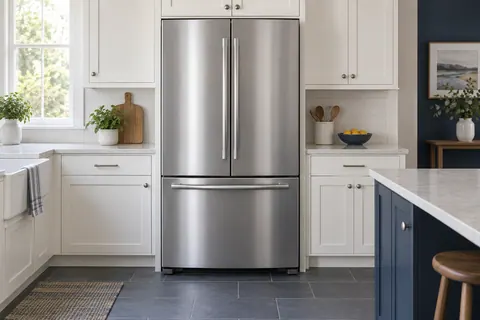
START HERE
A few safe checks.
General guidance, not a diagnosis. Your exact model’s manual takes priority. No panels, wiring, or gas connections need to be opened.
01Check the controls
Compare the setting with your model’s manual. Different controls work differently; a higher dial number does not always mean a higher temperature. Note any displayed warning or error before changing a setting. [1]
02Check that the doors close
Look for a food container or drawer keeping a door open. Check the visible seal for gaps or damage. Do not force a hinge or try to level a heavy refrigerator yourself. [1]
03Leave room for air
Rearrange food that blocks the interior air outlets. Keep this to items you can reach from inside; do not move the refrigerator or remove panels to reach fans or coils. [1]
When to get help
If the appliance remains warm, a door cannot seal, or an error persists, arrange professional assessment. Do not wait for a repair appointment to deal with unsafe food temperatures. These checks cannot identify a compressor, refrigerant, fan, or electrical fault.
Before you contact a professional
These details help explain the issue without taking anything apart.
- When you first noticed the change, and whether there was a power outage.
- Actual thermometer reading and whether the freezer is also affected.
- Brand, model if safely visible, and any error code or unusual noise.
Sources & model guidance
These official references informed this guide. Brand-specific features may not apply to your appliance; no manufacturer affiliation is implied.